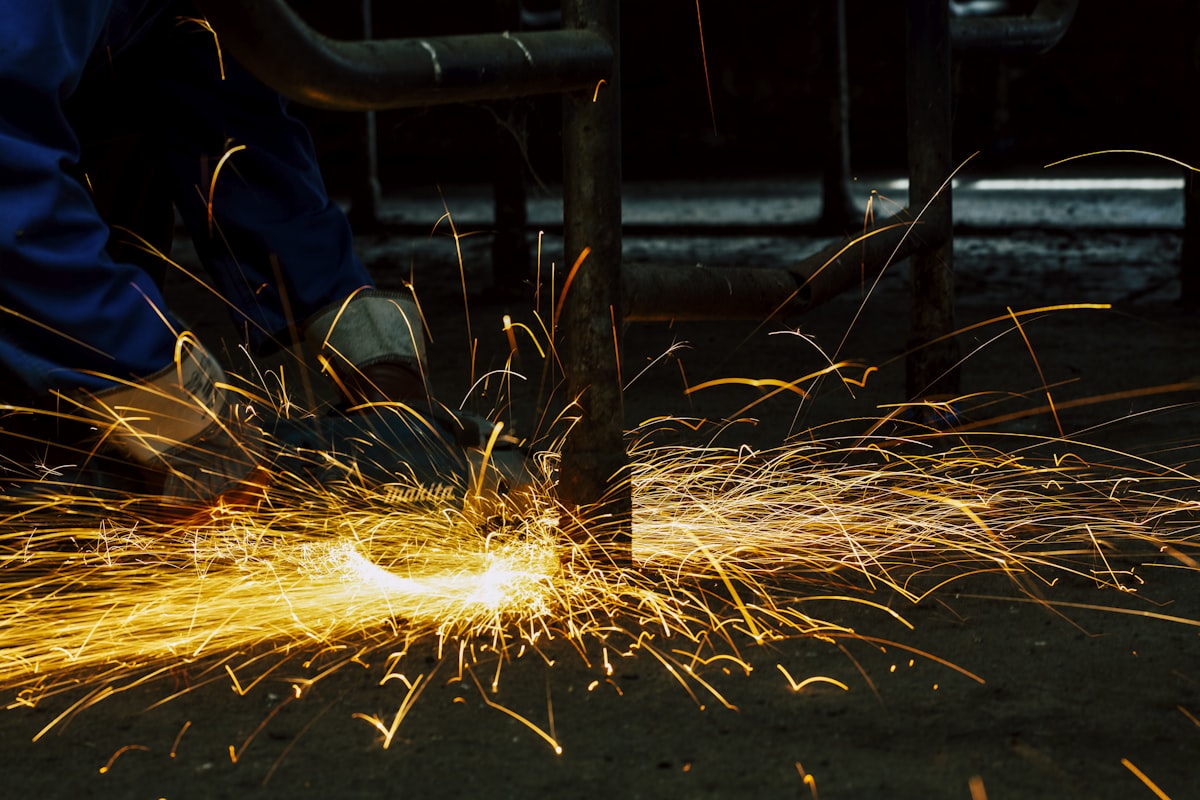
A manufacturer of steel products was installing new robotic weld cells and needed help exhausting the fumes those cells produce.
We first quoted a professionally designed and manufactured system from one of the manufacturers we represent. The price point exceeded what the customer was willing to spend.
When the pre-engineered system comes in over budget
A budget that will not cover the pre-engineered system does not change what the air has to do. So rather than drop to a fan that fits the number and hope it moves enough air, we went back to the requirements that system was designed against and met them with a different combination of equipment.
What we measured
Before quoting the alternative, we went back to measure the installation and review the process. We based the equipment selection on:
- Length, width and height of the area the cells occupy
- The distances involved between the arc and where a hood could hang
- Capture velocity required at the source
- The airflow required to hold that velocity across the hood opening
- The static pressure of the run, including the rise to the roof
- The route out of the building
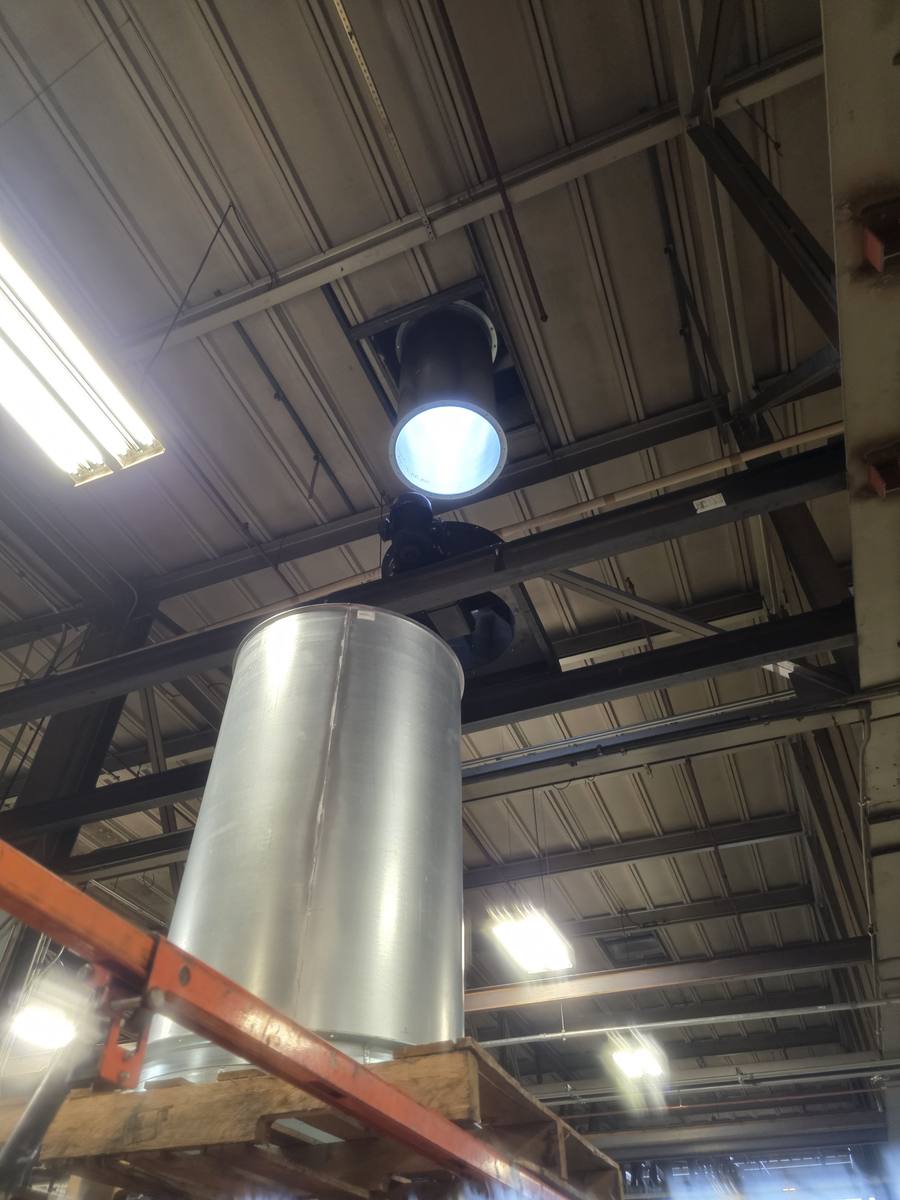
Those measurements assist in choosing which equipment is the right one.
Source capture and hood size
Source capture pulls fume from the arc before it reaches the operator's breathing zone or spreads through the bay. General building exhaust dilutes fume after it has spread.
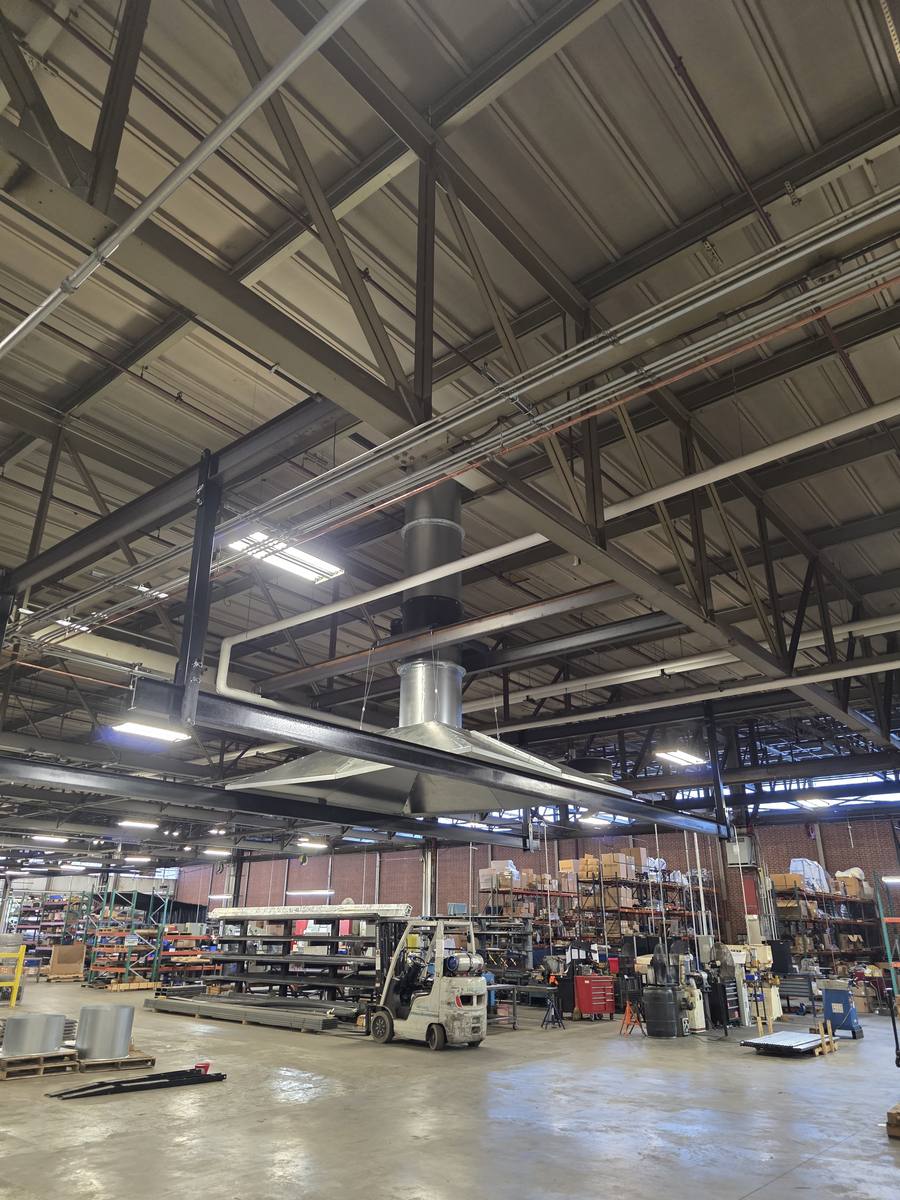
The hood was built to the required footprint rather than picked off a shelf, covering the cells and the area where the robot arms move, with clearance for the crane and cell structure.
On this job that came to a 10 foot by 12 foot canopy, fabricated in galvanized steel.
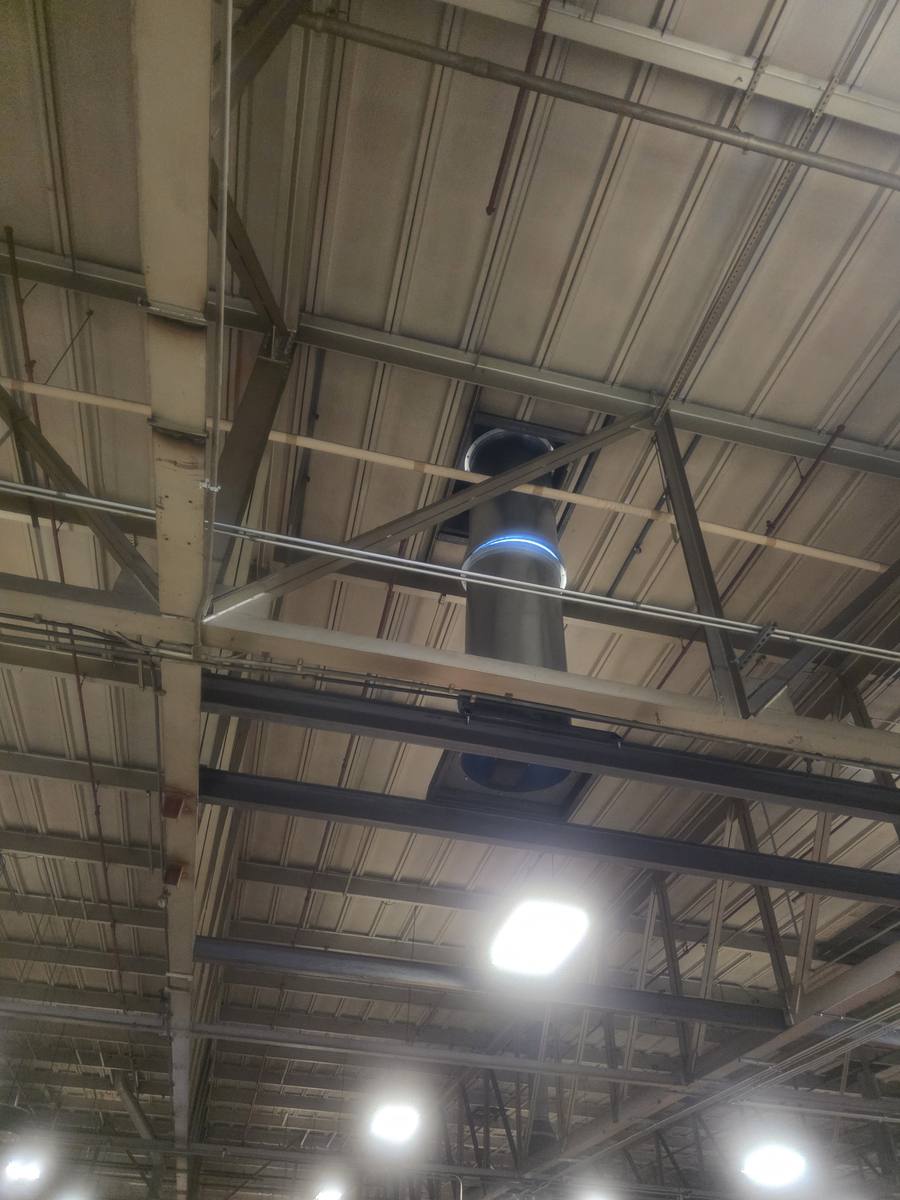
What went in
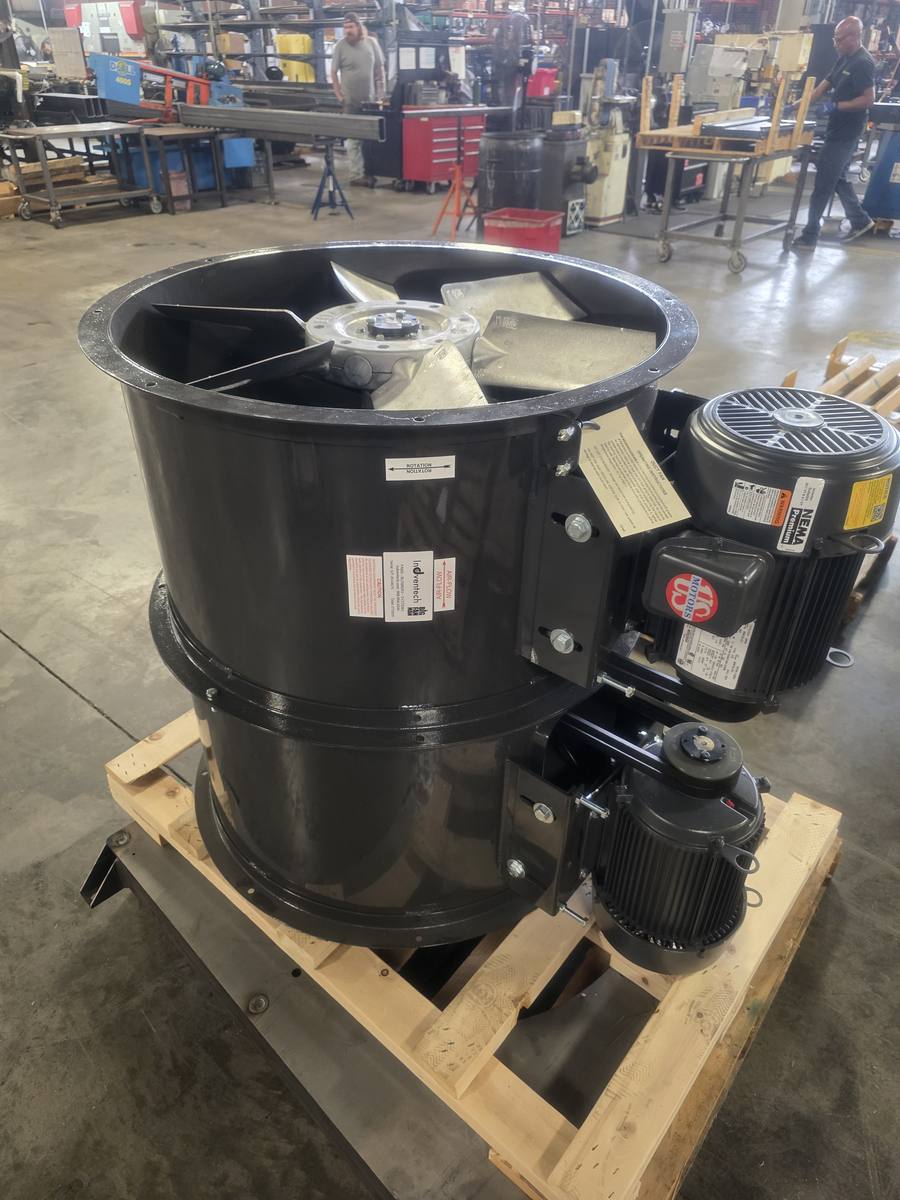
Each system is built around a B-30-5-CS belt drive tube axial duct fan.
- Belt drive, no VFD
- 14,000 CFM
- 5 HP
- 460V, three phase
- 30 inch galvanized steel flanged duct
- Custom 10 foot by 12 foot galvanized steel hood, sized to the required footprint
- Curb cap and jet cap at the roof
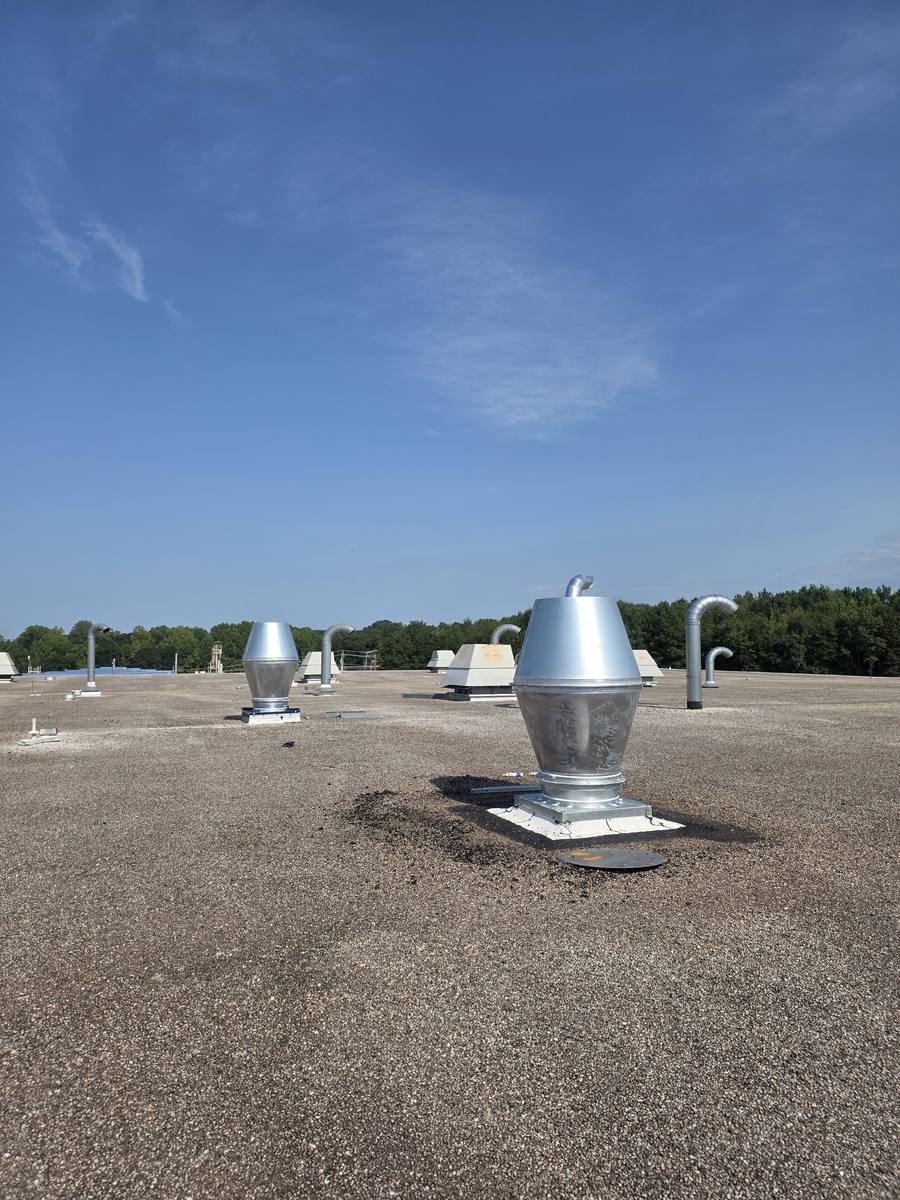
Belt drive is the right call on a job like this one. It allowed us to keep HP in check, because fan selection is not limited to the speed of the motor, and we still got the performance we needed.
The jet cap discharges the fume upward at velocity to keep it from rolling off the roof and getting back into a fresh air intake, while protecting the discharge from weather.
Two identical systems
We built and installed two identical systems.
Identical machines were installed so the footprint was the same for both.
Where it landed
The systems capture fume at the cells and route it out of the building. The customer was satisfied with the result.
If you are adding weld cells and the pre-engineered ventilation quote is over budget, call us before you shelve the project or buy on price alone. We will measure the area and distances and determine the capture velocity you need. Then we can look at how to meet those requirements within your budget.