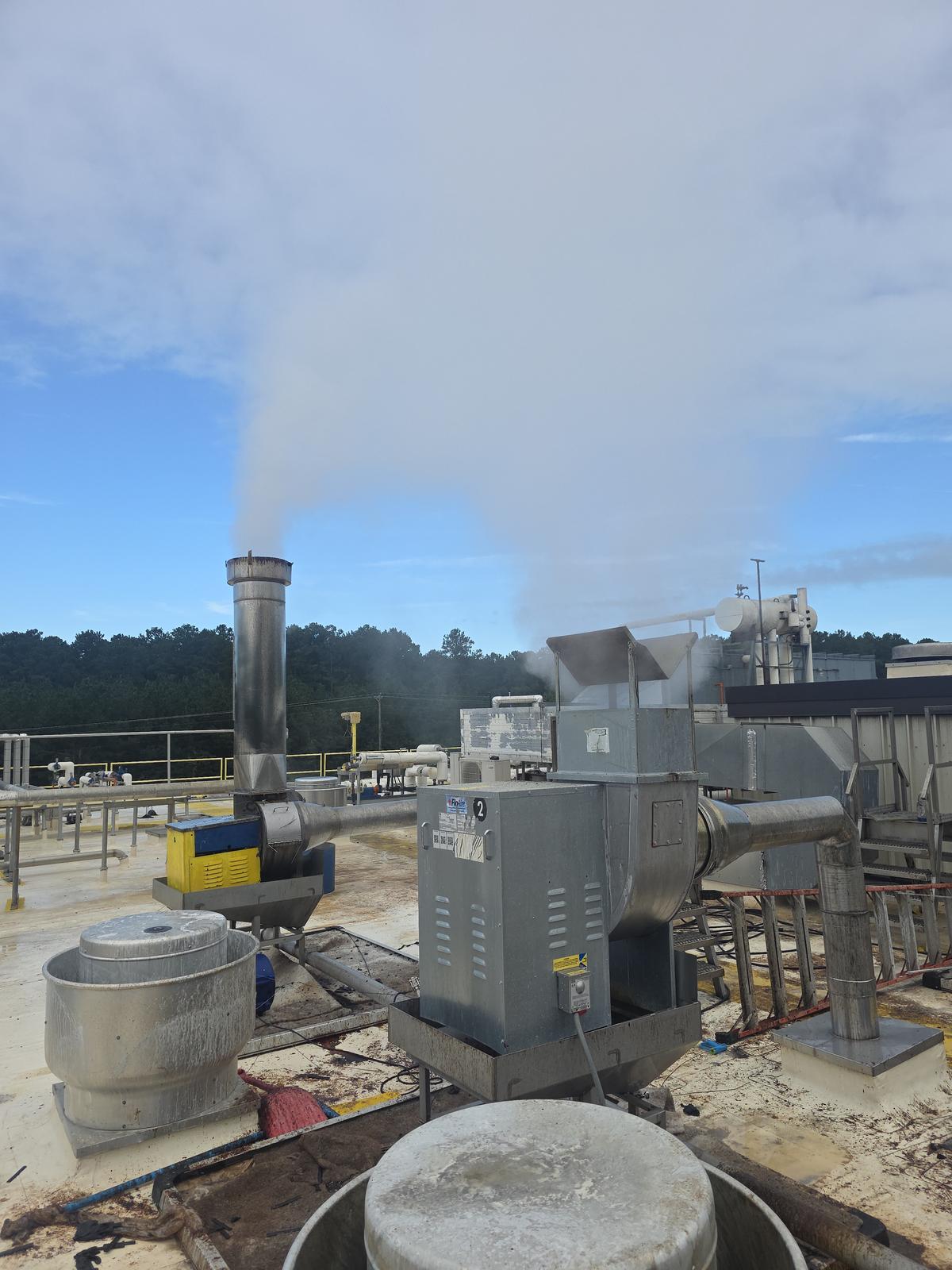
A Southeast metals processor asked us to look at the roof exhaust fans over their production area. The existing units had reached the end of their useful life, and the plant wanted replacements that would hold up better and mean fewer trips to the roof.
What's up there today
The current fans are older belt-driven units: hooded roof ventilators and larger upblast exhausters. Years of weather and exposure have left heavy rust on the housings and at the curbs. The plant considers them past repair.
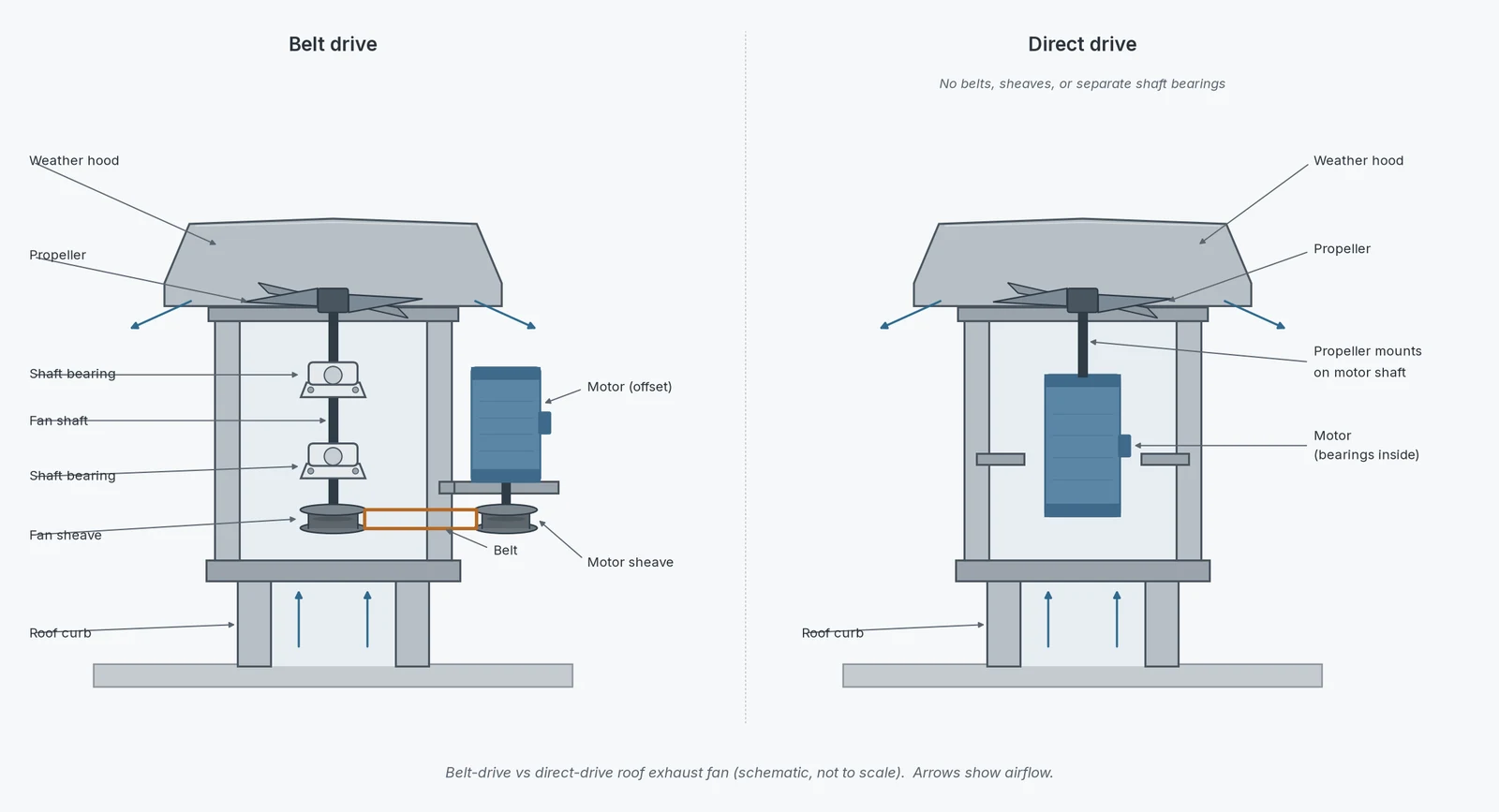
Belt-drive fans like these do their job, but they need regular attention. Belts have to be checked, tensioned and replaced. Pulleys (sheaves) wear and drift out of alignment. The fan shaft rides on its own bearings that need grease. Every one of those jobs means someone climbing onto the roof.
The proposed upgrade: direct-drive roof exhaust fans
We've proposed replacing the worn units with large-diameter direct-drive roof exhaust fans. Each would have a totally enclosed motor and a corrosion-resistant coating, and they would mount on the existing roof curbs.
Why direct drive means less maintenance
On a direct-drive fan, the propeller mounts right on the motor shaft. That one change removes most of the parts that need regular service:
- No belts to tension, re-tension or replace.
- No pulleys to wear or knock out of alignment.
- No separate fan shaft or shaft bearings to grease. The motor bearings are the only bearings in the fan.
- No belt slip or stretch, so there's no airflow loss from belts loosening between service visits, and no belt dust.
- Fewer parts, which means fewer things to fail and less time on the roof.
The enclosed motor and corrosion-resistant coating add protection against weather and corrosion.
One trade-off is worth knowing: a direct-drive fan's speed is set by its motor, so it's chosen for the job up front instead of being adjusted later by swapping pulleys. When variable conditions are desired, we provide VFDs to accommodate this.