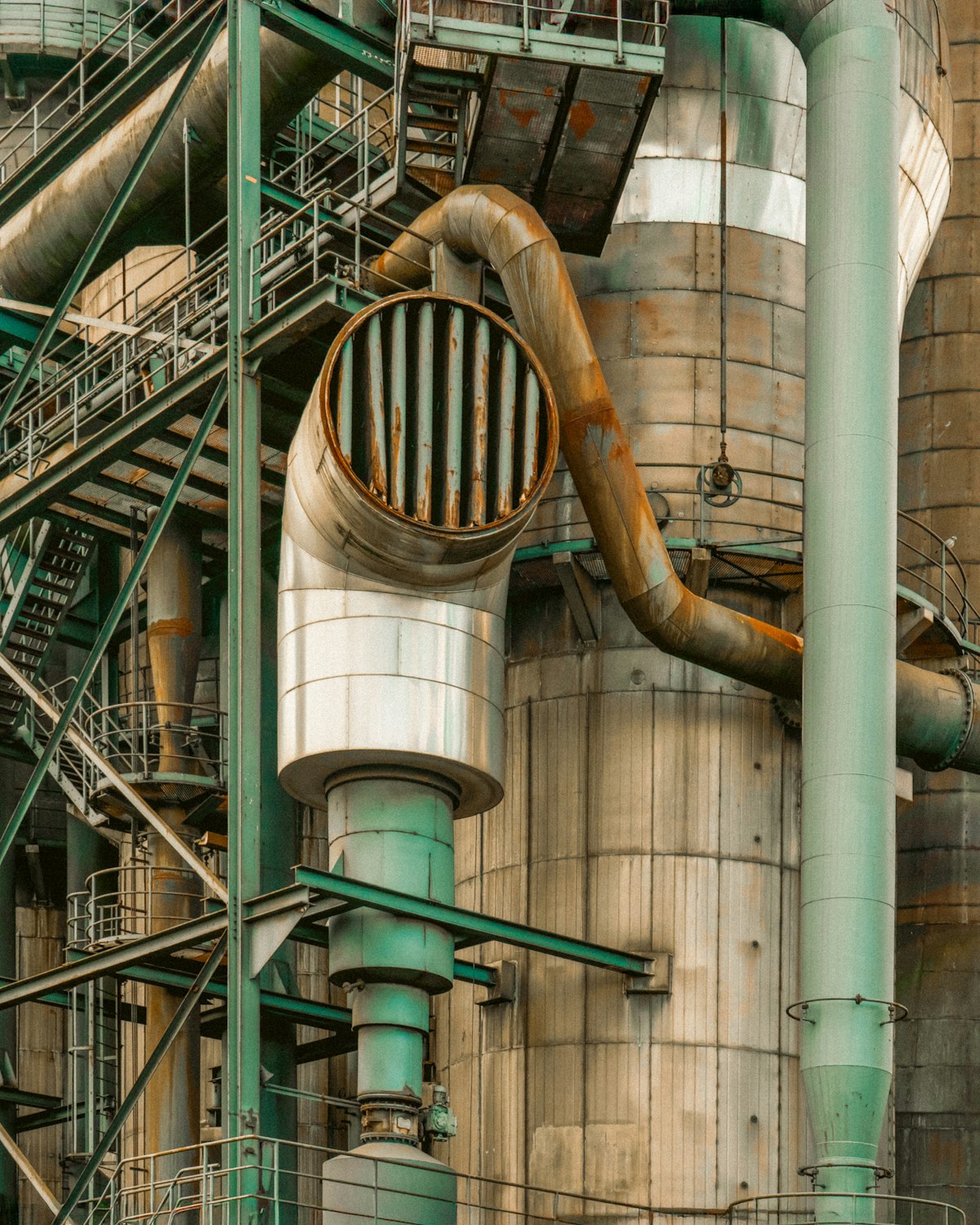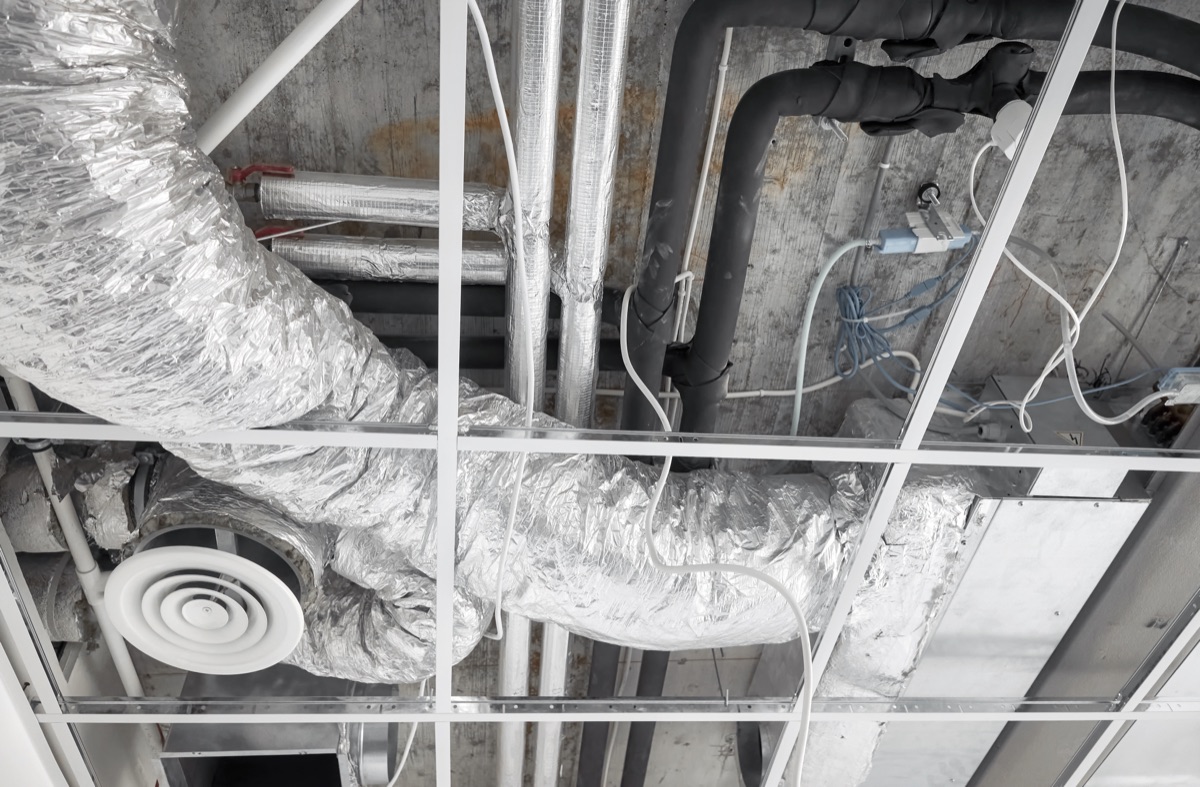
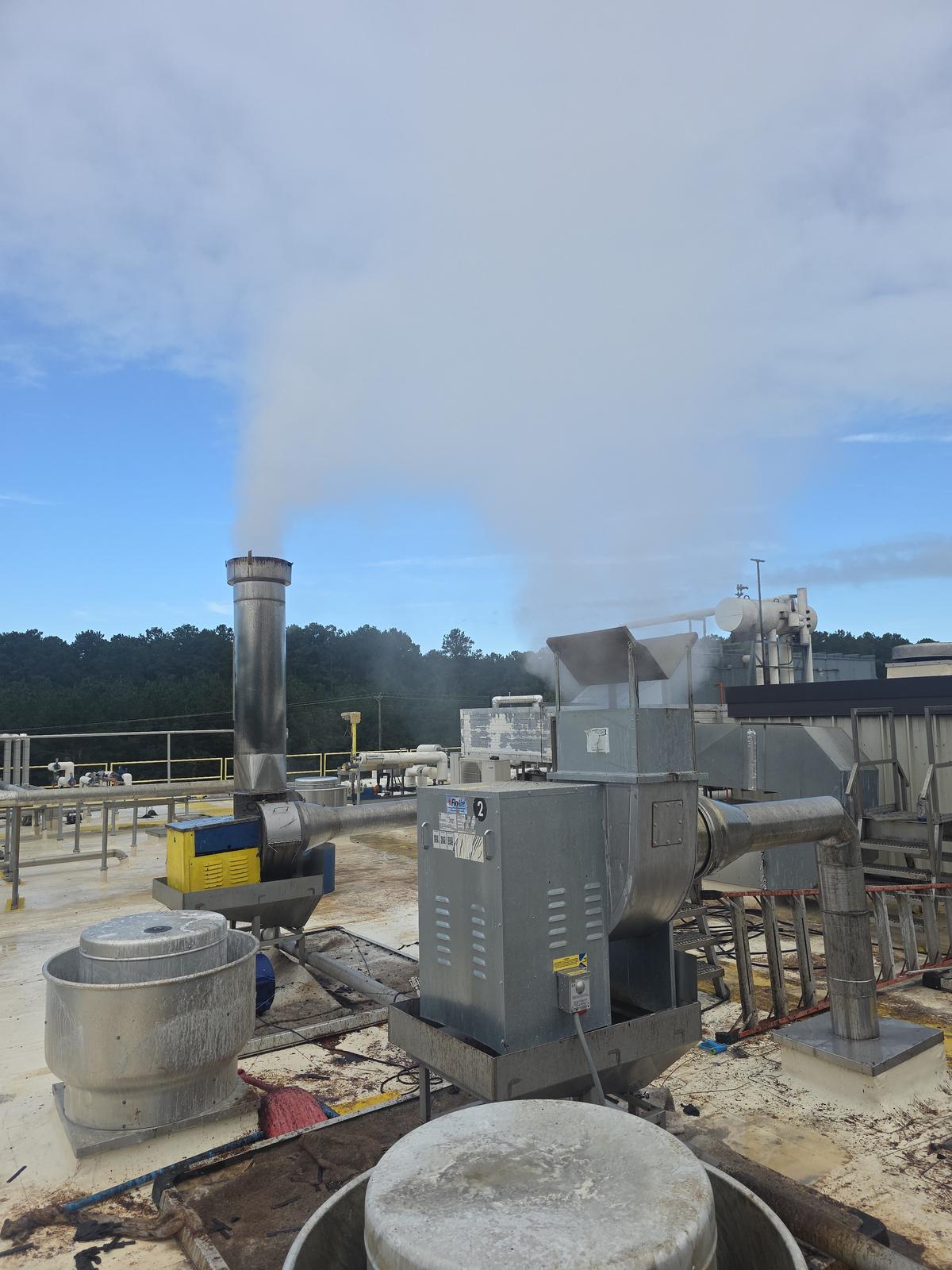
A meat processing and packing plant called us because their oven exhaust fans were failing. They wanted replacements, and they were already pricing the conventional fans for the application.
We went out and looked at the installation first. The existing fans had deteriorated, and they were incorrectly sized on top of that. Between the two, the ovens were getting far less exhaust than they needed. Ordering the same fans again would have replaced the wear and left the sizing problem sitting there.
What a site visit measures
A nameplate tells you what somebody specified years ago. It does not tell you who specified it, whether it was the original design, when it went in, or whether the process has changed since. It does not tell you whether the specification was right in the first place. Here it was not.
So before quoting anything, we measured four things:
- Pipe sizes at the existing installation
- The airflow needed to exhaust the ovens properly
- The power available at the plant
- The footprint the replacement had to fit into
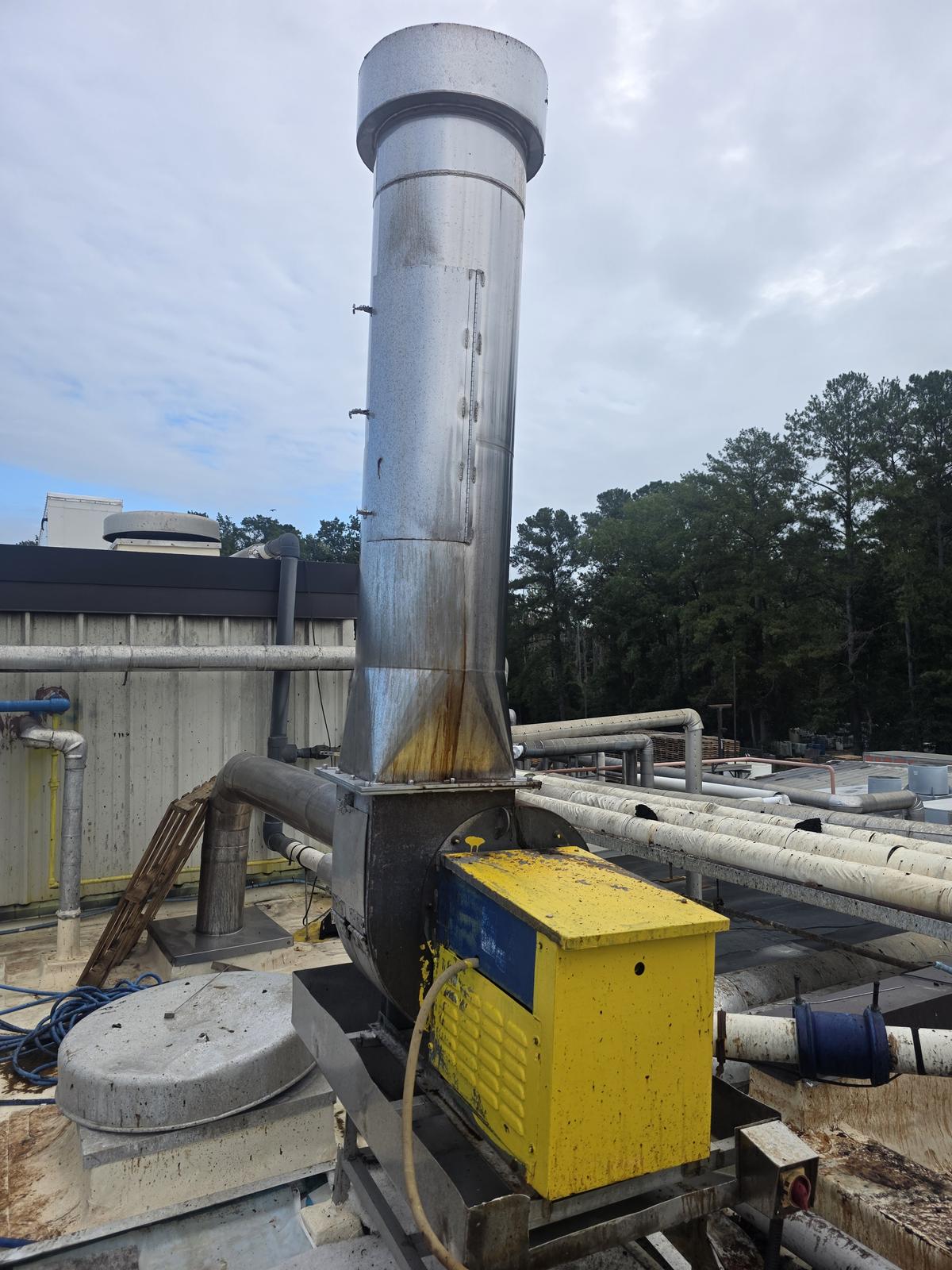
Those four numbers are what you pick the replacement from.
Why it cost about half
The fans the plant had been pricing were the conventional choice for this duty, and they were priced that way. Once we had the measurements, we specified a different fan that met every one of those requirements at roughly half the cost. Nothing was given up to get there. The savings came from matching the equipment to the actual duty instead of matching it to the outgoing model.
Prove it on one fan first
We did not ask the plant to commit to the full set. We supplied one fan, and they tested it in their own installation against their own requirements. Once it performed, they ordered several more and began working through the remaining positions.
One fan is a change a running plant can absorb. A complete changeout on equipment nobody has watched run is not.
Fitting new equipment to existing pipe
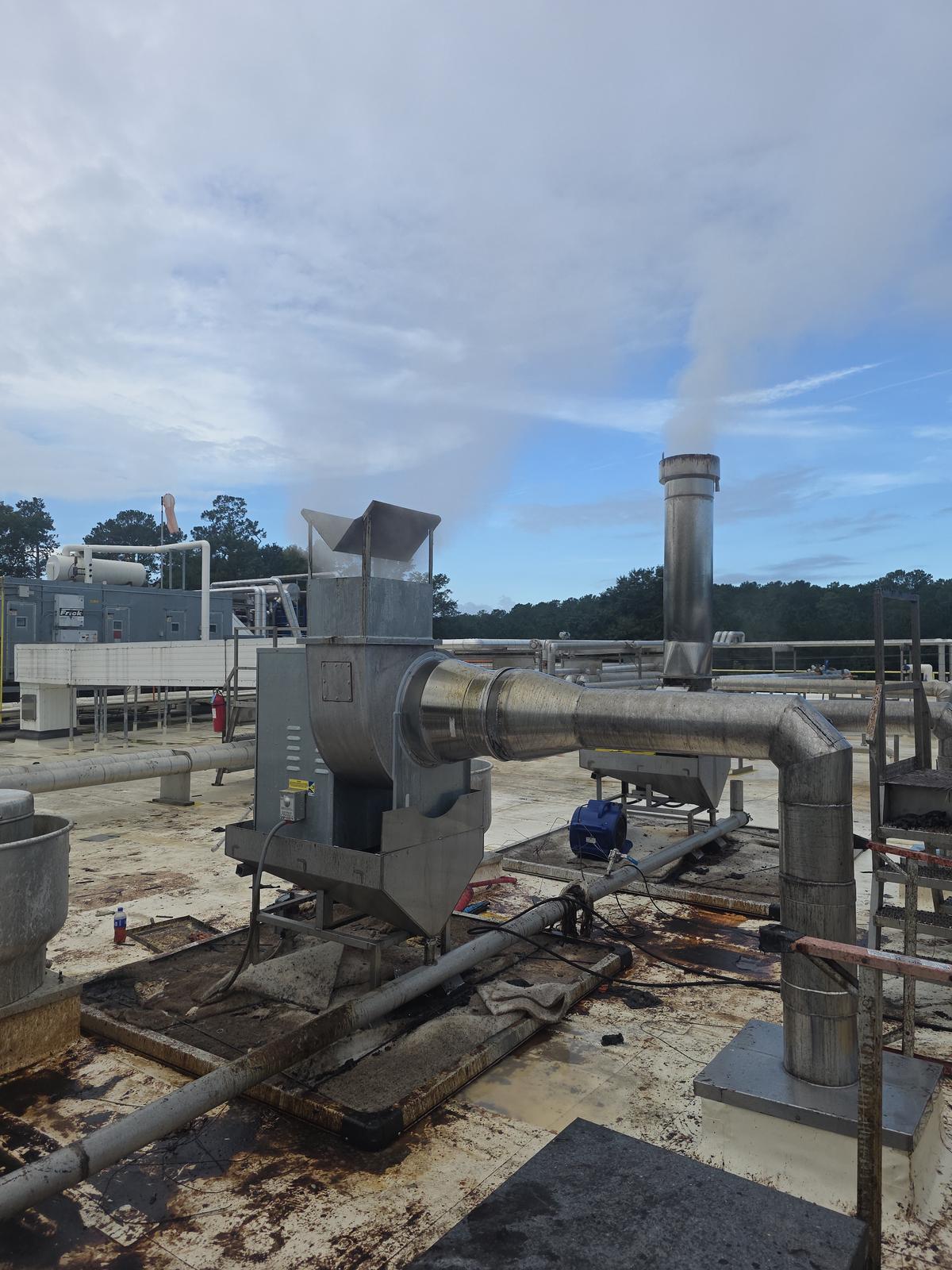
A different fan usually means different connections, and that is where a good specification turns into an expensive one. We supplied the transition pieces and the rest of the components needed to fit up to the pipe already there, so the plant kept its ductwork and its layout without major changes.
Dropping the belt drive
The original fans were belt driven. We replaced them with direct drive.
A belt, pulley and sheave assembly brings standing maintenance with it, and two extra bearings along with it. Somebody has to check belt tension, check alignment, replace belts, and monitor grease on a schedule. Every one of those parts is turning, and every turning part wears. Direct drive takes all of it out. The motor turns the wheel.
Speed control without a sheave
We built a variable frequency drive into the solution so the fan can be set to run at a specific speed. That is the capability plants usually keep a belt drive for, and the drive delivers it with no mechanical assembly to adjust.
What went in
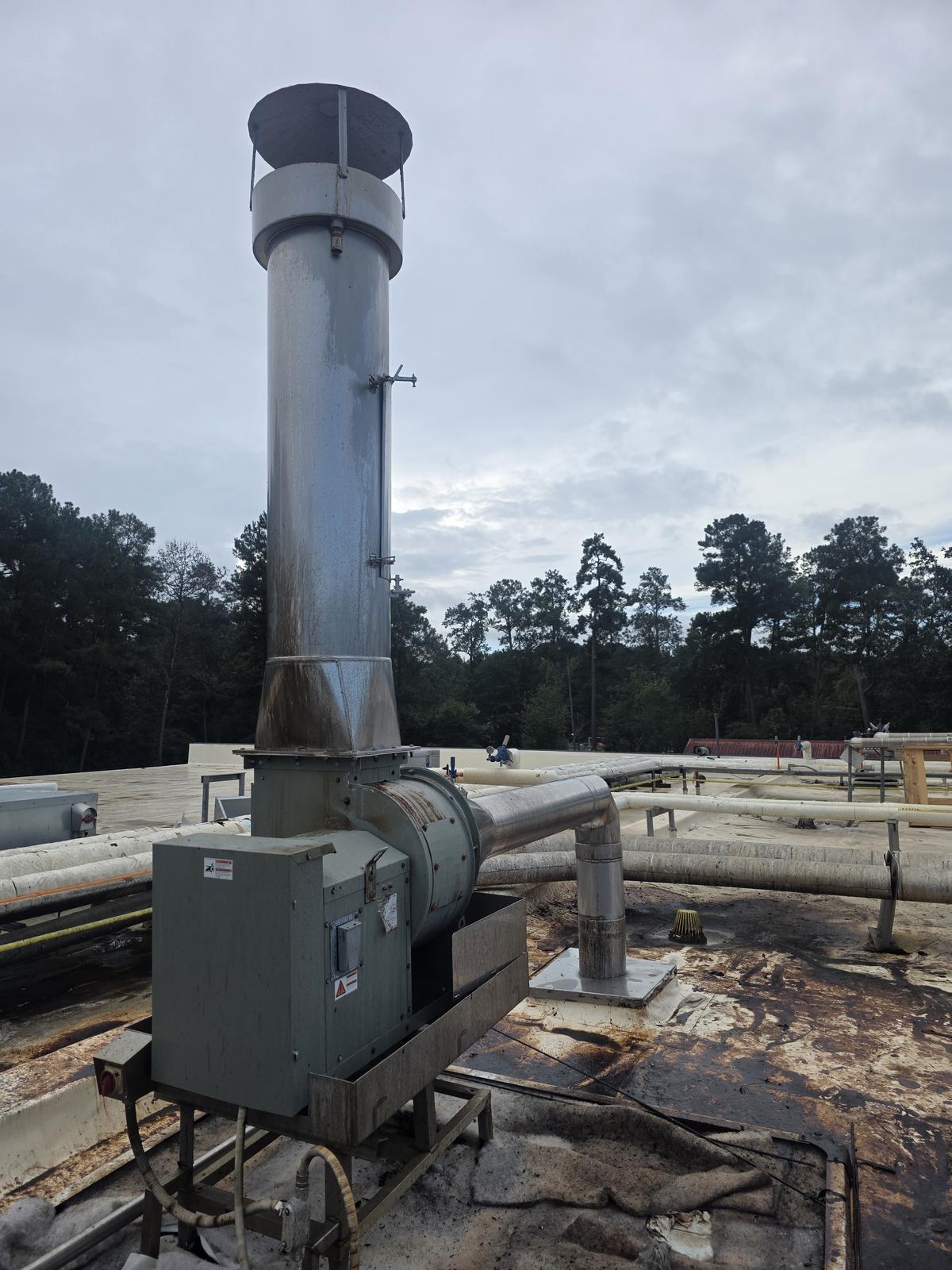
FABI18DD direct-drive exhaust fan with an integrated VFD.
- 3,000 CFM at -2" static pressure
- 1,410 RPM
- 3 HP, 460V
- 16" stainless connection with duct V-clamps
- Integrated rain cap
Transitioned to the plant's existing 16" stainless duct, so the fans went in plug and play.
Where it landed
The ovens are being exhausted the way they should be. The plant is replacing the rest of the fans on equipment it has already watched run, and the belt maintenance is gone.
If your oven exhaust fans are failing and you are pricing identical replacements, call us for a site visit first. Have us check the condition of what is up there and measure the pipe, the airflow, the power and the footprint before you place the order.