
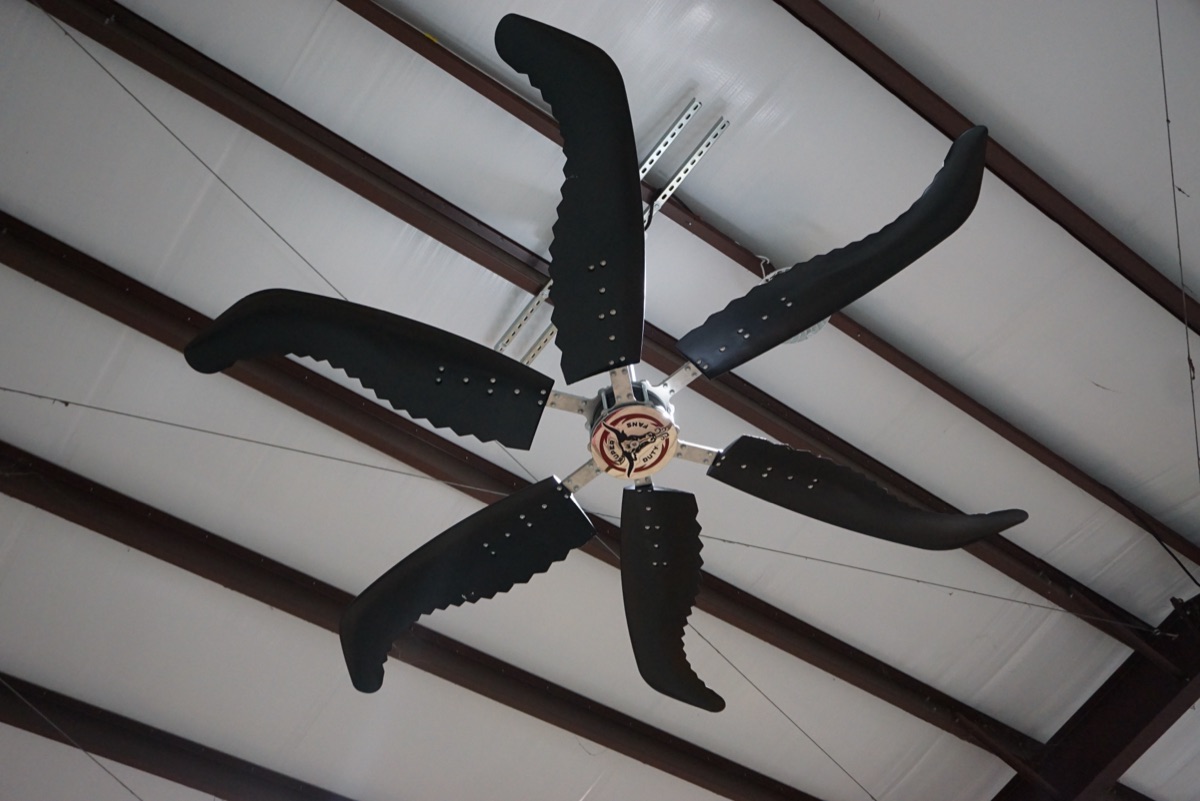
The physics of air movement explains why HVLS (High-Volume, Low-Speed) fans are more effective than high-speed alternatives in industrial settings.
Understanding this difference helps you make informed decisions about facility ventilation.
The Speed vs. Volume Tradeoff
High-speed fans move air quickly but over limited areas. HVLS fans move massive volumes of air slowly, creating broader, more effective coverage.
- High-speed fans create localized, intense airflow
- HVLS fans create gentle, widespread air movement
- Volume matters more than speed for comfort
- Slow-moving air reaches further before dissipating
Energy Efficiency
Moving air at high speeds requires exponentially more energy than moving it slowly. HVLS fans deliver superior coverage at a fraction of the energy cost.
The energy savings alone often justify the HVLS investment.
Noise Considerations
High-speed fans generate significant noise from turbulence. HVLS fans operate quietly, improving the work environment rather than adding to noise pollution.
In noise-sensitive environments, HVLS is clearly superior.
Make the Right Choice
For most industrial applications, HVLS fans provide better results than high-speed alternatives. Contact Big Fan Man to discuss the best approach for your facility.